A basic two-player constructed learning duel, using a 60-card deck each and normal 20-life rules. This is not a complete Commander, Limited or tournament guide. Checked against the September 25, 2026 Comprehensive Rules.
- Players
- 2 for this constructed learning duel
- Cards & equipment
- One 60-card Magic deck per player, plus life trackers
Magic the Gathering rules for a two-player duel
This guide teaches an ordinary constructed learning game between two opponents, each using a prepared 60-card deck. Both start at 20 life. Creatures attack, spells change the position, and lands usually provide the mana needed to use those spells. Reducing the opponent to zero life is the usual route to victory.
Use two beginner decks intended to play against each other. A pile of attractive cards is not necessarily a usable deck: it needs lands that produce the colors its spells require. Constructed normally permits at least 60 cards and up to four copies of a card by English name, with exceptions including basic lands and specific card text. A 60-card deck is not automatically legal in Standard; that format also has card-pool and banned-card restrictions.
Prepare the table and opening hands
Give each player a life tracker and space for a library, battlefield and graveyard. The library is the face-down deck; the graveyard is a separate face-up discard area. Keep the exile area distinct when a card calls for it. Shuffle, choose who takes the first turn by an agreed random method, and draw seven cards each.
A player may mulligan an unsuitable opening hand. Under the normal two-player procedure, shuffle it back, draw seven again, then put one card on the library's bottom for each mulligan taken. One mulligan leaves six cards; two leave five. Decide whether to keep before play begins. The first player skips their first draw step; the second player draws normally. Do not give a free first mulligan just because multiplayer Magic sometimes does.
Read mana costs and separate lands from spells
Playing a land is different from casting a spell. Normally, play one land during either main phase of your own turn, with an empty stack. You do not get another land allowance in the second main phase. Basic lands can tap to produce mana: turn the card sideways to show it is tapped. They stay on the battlefield rather than being discarded as payment.
For example, a spell costing one generic mana plus one green mana needs two mana total, at least one green. Two untapped Forests can provide both. A Forest and a Mountain also work: green pays the green requirement and red pays the generic requirement. Two Mountains do not supply the required green. This is an illustrative cost, not a recommendation about a particular card. Unspent mana normally disappears as each step or phase ends.
Follow the turn in order
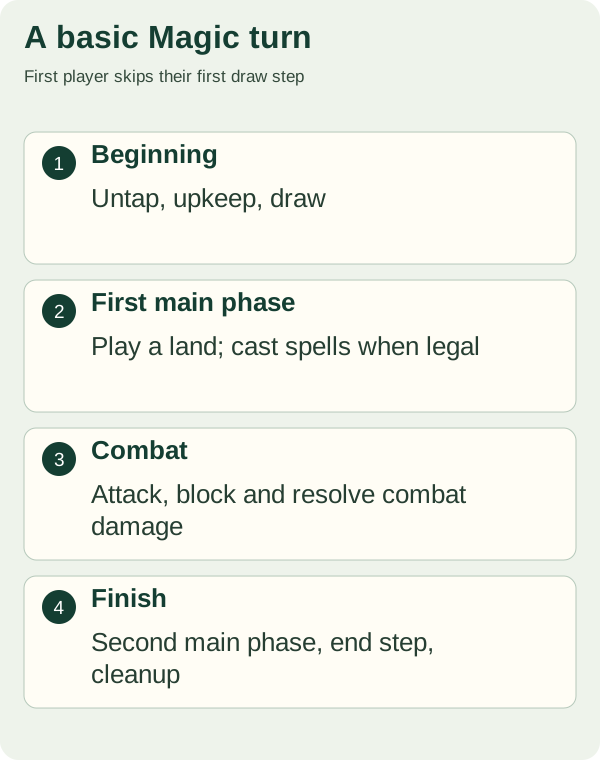
- Beginning: untap your permanents, deal with upkeep triggers, then draw, remembering the first-player exception.
- First main: play your land if wanted and cast spells at their permitted times.
- Combat: choose attacks, allow blocks and resolve damage.
- Second main: develop the board after seeing combat's result.
- Ending: handle end-step triggers. In cleanup, discard to your maximum hand size, normally seven, and remove marked damage and effects lasting until end of turn.
Announcing these stages helps a first game. Say that you want to move to combat rather than immediately tapping attackers and demanding damage. Your opponent may have a legal action before attackers are declared. Likewise, keeping a creature untapped can preserve a blocker for the opponent's next turn.
Cast spells and leave room for responses
Normally, creatures, artifacts, enchantments and sorceries are cast during your own main phase with an empty stack. Instants have more flexible timing when you have priority. Abilities and cards such as those with flash can change these defaults. Read the actual card before applying a shortcut.
A spell normally waits on the stack before resolving. Players can respond when they receive priority; the most recently added spell or ability resolves first after both pass. Suppose your opponent casts an instant and you have another instant that can legally respond. Announce yours before their spell resolves, pay its costs, then resolve the responses in order. You cannot wait to see the completed result and retroactively interrupt it. On resolution, follow the spell's instructions. A creature spell normally becomes a creature on the battlefield, while an ordinary instant or sorcery goes to its owner's graveyard after its instructions are followed.
Attack, block and calculate ordinary combat
Choose all attackers together. They normally tap; tapping is not itself damage. A creature normally cannot attack, or use an ability with a tap symbol in its cost, unless you have controlled it continuously since your latest turn began. Haste is an exception. A newly cast untapped creature can normally block, however.
The defender chooses legal untapped blockers. Blocking does not normally tap them. In an ordinary fight without special abilities, creatures deal damage equal to power simultaneously; damage at least equal to toughness is lethal. A 3/3 attacker blocked by a 2/2 deals three damage to the blocker and receives two. The 2/2 dies and the 3/3 survives with two damage marked until cleanup. The defender takes no damage from that blocked attacker in this example. Trample, first strike, deathtouch and other abilities can change the result; do not apply this example blindly to them.
Finish the game and choose your next format
Normally a player loses at zero or less life, or when required to draw more cards than remain in their library. Merely having an empty library does not immediately lose the game. Specific cards can create other wins, losses or exceptions; check their current wording and the official rules for unusual positions.
Commander uses a different deck-building system and normally 40 starting life, so do not mix its setup into this duel. Limited also has different deck construction. This introduction does not cover every keyword, planeswalker, sideboard or tournament procedure. Use Wizards' rules reference for those questions. For a lighter dedicated deck, compare Monopoly Deal; for an ordinary pack without deck construction, try Memory. The card game finder can compare group and deck requirements.
Rule references and corrections
This independent explanation uses the references below. Follow the instructions for the edition you own and agree on house rules before play.
- Wizards of the Coast: how to play Magic
- Wizards of the Coast: current official rules and downloads
- Wizards of the Coast: Comprehensive Rules, effective September 25, 2026
- Wizards of the Coast: Standard format and deck requirements
- Wizards of the Coast: Commander is a separate format
Found a mistake? Send a correction with the game name and source.
A few useful answers
Questions before you deal
Does every Magic game use a 60-card deck?
No. This guide uses a 60-card constructed learning deck. Ordinary constructed has a 60-card minimum, while Limited and Commander have different requirements. Format legality also depends on which cards are allowed.
Can a creature block on the turn it enters?
Normally yes, if it is untapped and no effect prevents the block. Summoning sickness normally restricts attacking and abilities with tap or untap symbols, rather than blocking.
Do tapped lands go to the graveyard after paying mana?
No. A basic land tapped for mana normally remains on the battlefield and untaps during your next untap step. The mana is spent; the land is not consumed.
Does an empty library mean an immediate loss?
No. The normal loss occurs when you are required to draw more cards than are available, subject to effects that change the result. An empty library alone is not the loss condition.
Keep exploring M card games
Compare all card games that start with M, or use the card game finder for your group.