Original Munchkin base game, 168 cards and 3–6 players, using the six-page original rules PDF currently linked by its product page (PDF metadata dated April 2020). Not Munchkin Quest, Second Edition or an expansion mix; optional Faster Play is not used.
- Players
- 3–6 (original base game)
- Cards & equipment
- Original 168-card Munchkin set, a six-sided die and level counters
Munchkin rules for the original base game
These Munchkin rules cover the original 168-card dungeon card game for three to six players. Use separate Door and Treasure decks, one six-sided die and a Level tracker for each player. Start at Level 1 and race to Level 10, normally by killing a monster for the winning level. No referee or roleplaying campaign is required.
Match the rulebook to your box. Munchkin Quest, Second Edition and themed sets can change details. This guide uses the original product page's linked six-page rules and the normal turn, without the optional Faster Play procedure. Card text often changes general rules, but exceptions to protected rules, such as the winning-level requirement, must be explicit.
Set up and distinguish your hand from cards in play
Shuffle Doors and Treasures separately, leaving a face-up discard pile for each. Deal four cards from each deck to everyone. Give each player ten counters or another tracker for Level. Start at Level 1 as a human with no Class. You may play an appropriate Race, Class and usable Items from your opening hand. Choose a starting player, then play clockwise. Reshuffle a deck's own discards when it runs out; do not mix Door and Treasure discards.
Cards in your hand are not active bonuses. Cards on the table are in play and visible to everyone. A weapon in your hand does not increase combat strength simply because you intend to use it later. Likewise, an instruction affecting an Item in play is not automatically satisfied by showing a similar card still held privately.
Carry Items, equip legal gear and track Level separately
Items have a Gold Piece value, including a printed No Value. Carrying one on the table and equipping it for its bonus are different. Normally equip one Headgear, one Armor, one Footgear, and either two one-Hand Items or one two-Hand Item. Race, Class and card restrictions still apply. Turn unequipped Items sideways and do not count their bonuses. You normally may carry only one Big Item; specific abilities can override that.
Your Level is the number tracked by counters. Combat strength adds relevant bonuses and penalties to it. A Level 3 character with two points of usable bonuses fights at five, but remains Level 3 for effects checking Level. Arrange equipment before combat. You cannot swap it around during a fight or while Running Away.
Munchkin turn order: Door, Trouble or Loot, then Charity
- Kick Open the Door: reveal one Door card. Fight a monster immediately. A Curse affects you immediately if applicable; another kind of card may be kept or legally played.
- If no monster appeared: either Look For Trouble by fighting a monster from your hand, or Loot the Room by drawing one face-down Door card. Do not do both. If you fought at the first step, skip this choice.
- Charity: reduce your hand to its limit, normally five, through legal plays or give the excess to the lowest-Level player. Divide as evenly as possible among tied lowest players. If you are lowest or tied lowest, discard the excess instead.
Card abilities can alter limits, so read your Race and Class. After Charity, the next player's turn begins.
Munchkin rules for combat: strength, ties and interference
Compare combat strengths, including the monster's special text. Normally you must exceed its strength; a tie favors the monster. A Warrior's ability is a familiar exception. Other players can change a fight with legal Curses, one-shot Items and monster enhancers. Adding a monster needs an applicable rule or card, such as Wandering Monster; a monster held in hand is not freely added to every fight. Multiple monsters fight with their combined strength.
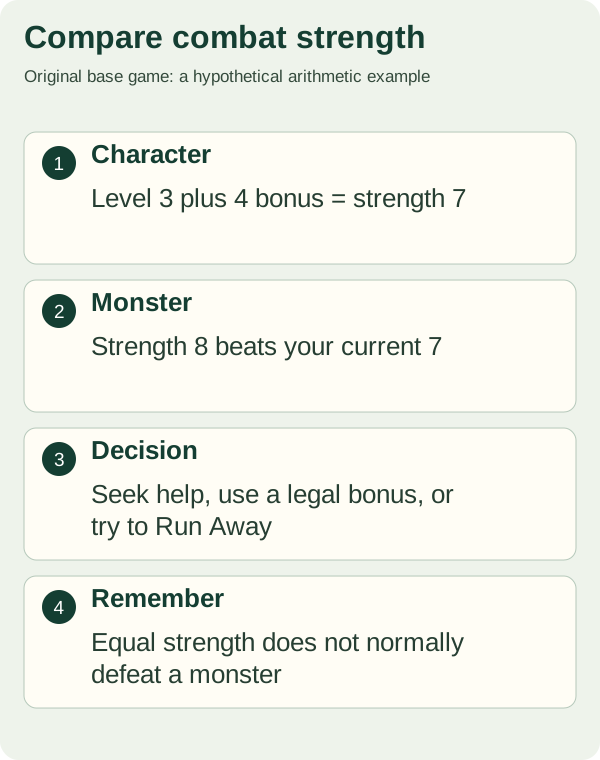
For an original example, take a Level 3 character with four points of usable bonuses against a monster at six. Seven beats six. If an opponent legally adds three to the monster, the comparison becomes seven against nine. Recalculate before claiming victory. Allow a reasonable opportunity for interference rather than grabbing rewards immediately. Removing a monster without killing it may end the fight, but does not automatically earn a level or Treasure.
Ask one helper and settle rewards after the fight
If you cannot win alone, negotiate with another player. Only one helper joins with their combat strength, although everyone may play legal interference. Agree the reward split, including who chooses Treasure first, before accepting help. Check how the monster interacts with the helper's Race or Class. You cannot force another player to help in a combat for your winning level.
Continuing the example, a helper contributing four raises your side from seven to eleven against nine. That is enough unless another effect changes the position. After the entire combat is finished, gain the levels specified for killing the monsters and draw their Treasure rewards. Draw privately when you killed them alone, publicly if someone helped, then honor the deal. A helper normally gains no level; an Elf helper has a specific exception. Do not collect rewards midway through a multi-monster combat.
Run Away, apply Bad Stuff and recover from death
If you cannot win, Run Away rather than taking a free loot card. Roll the die: the normal escape is five or more, modified by relevant cards or abilities. Failure applies that monster's printed Bad Stuff. Roll separately for each monster; a helper also makes their own escape rolls. Failing an escape does not always mean death: read the actual consequence. If Bad Stuff kills you, you do not continue Running Away from the remaining monsters.
If you die, keep your Level, Race, Class, continuing Curses and any Half-Breed or Super Munchkin. Lay out your other cards, including your hand, for body-looting: other players choose one available card each in descending Level order, with ties settled by a die. Discard remaining loot. Revival begins with the next player's turn; at the start of your own next turn, draw four from each deck, make legal setup plays and take your turn normally.
Winning Munchkin: selling, trading and the Level 10 rule
On your turn, outside combat and Running Away, sell Items worth at least 1,000 Gold Pieces per level gained. Excess value gives no change. Selling 1,200 gains one level, not a stored 200 credit. You may sell from your hand or the table, but cannot buy Level 10. Ordinary Go Up a Level cards cannot give the winning level either.
Trade only Items already on the table, with neither partner in combat; do not trade a private monster or Class as though it were equipment. For Level 10, normally kill a monster, unless a card explicitly permits another winning route. Keep the official FAQ handy for exact interactions. For a different collection race, compare Monopoly Deal; for a two-player customizable deck, see Magic. The card game finder compares player and deck requirements.
Rule references and corrections
This independent explanation uses the references below. Follow the instructions for the edition you own and agree on house rules before play.
- Steve Jackson Games: original Munchkin product and contents
- Steve Jackson Games: original Munchkin rulebook (PDF linked by the product page)
- Steve Jackson Games: Munchkin FAQ and clarifications
- Steve Jackson Games: how to play Munchkin
- Steve Jackson Games: official rules index for edition matching
Found a mistake? Send a correction with the game name and source.
A few useful answers
Questions before you deal
Is Level the same as combat strength?
No. Combat strength combines Level with relevant bonuses and penalties. Equipment can make you stronger in combat without raising the Level shown on your counter.
Do players or monsters win a tied combat?
The monster normally wins a tie. A specific ability, such as the Warrior's, can change this; check the cards actually in play.
Can you Loot the Room after fighting a monster?
No. The normal turn permits the Look For Trouble or Loot the Room choice only if no monster appeared when you Kicked Open the Door. Fighting first does not grant a consolation loot draw.
Can you buy Level 10 or use a normal Go Up a Level card to win?
No. Selling Items and ordinary Go Up a Level cards cannot grant the winning level. Normally you must kill a monster, unless a card explicitly allows a different way to win.
Keep exploring M card games
Compare all card games that start with M, or use the card game finder for your group.